

Raising a toddler is a beautiful mix of hugs, giggles—and, let’s be honest—meltdowns that test your patience daily. But here’s a secret: many tantrums stem from toddlers wanting independence but not knowing how to express it. By teaching your toddler self-help skills, you’re not only nurturing independence but also helping them feel capable and confident. And when a toddler feels more in control of their world, those big emotional blowups often shrink in size and frequency.
Here are 7 Simple Self-Help Skills you can teach your toddler to build their confidence and avoid tantrums:
- Consider their age and stage of development. Example: One wouldn’t expect a one-year-old to be able put on their socks and shoes without assistance, but they could try feeding themselves with a spoon, holding their own bottle or cup, stand while getting dressed and put their arms and legs into the proper holes, remove their socks and possibly pants, etc. Working on these everyday skills consistently will build your child’s belief in themselves and encourage them to continue trying new things with little to no assistance. Of course, supervision is always recommended with toddlers who are learning new things.
- Allow extra time for your child to attempt new tasks. Avoid rushing your child out the door or back in the door and into a new activity if he or she is trying to practice a new skill – such as taking off or putting on shoes, socks, jacket, etc.
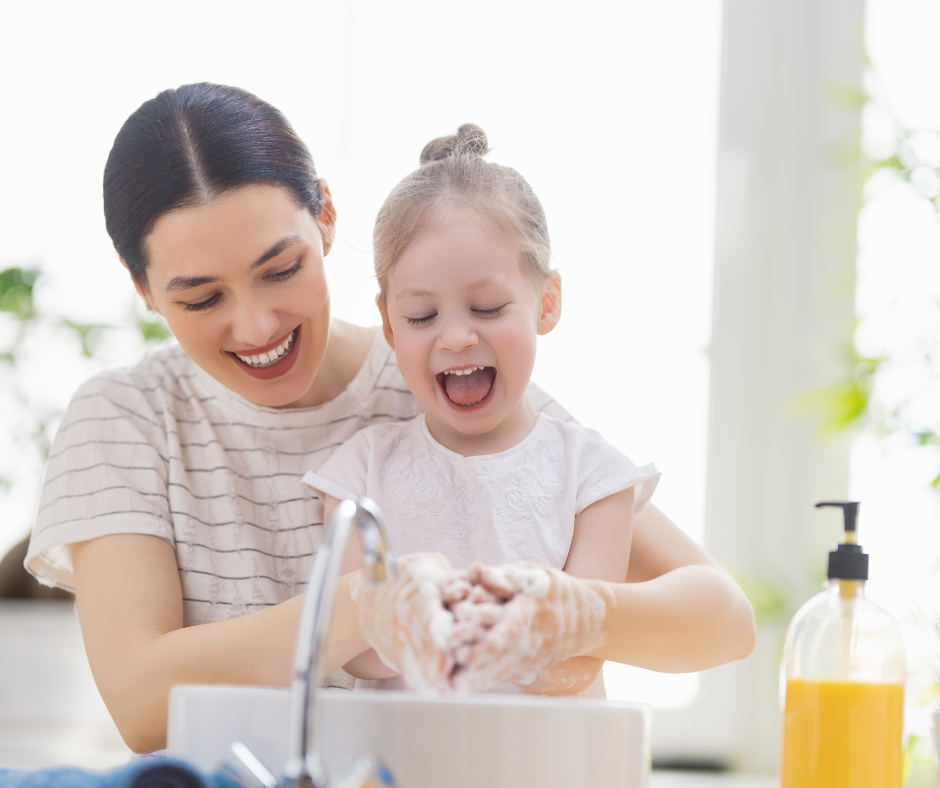
- Set up your child’s environment for success. Provide child-safe stools for washing and drying hands and “helping” with dinner or simply observing you. Again, keep stages of development in mind here. Child safety gates are recommended to block children from dangers in the home. But, you can have your child’s clothing set out or placed in lower drawers for easy access, which discourages climbing.
- Encourage problem-solving by providing toys and items that offer opportunities for practicing skills like buttoning, zipping, tying, and snapping. As well, puzzles with just a few pieces teaches spatial awareness. Teach them songs or fingerplays that help them remember steps or processes.
- Offer ONLY 2 choices. Less than that provides no autonomy and more than that cause overwhelm. Children crave choices with boundaries. Example: Would you like to wear your dinosaur shirt or your frog shirt today? Would you rather have broccoli or rice with dinner tonight?
- Praise efforts, not just results. The results will come if the belief, encouragement, and patience is there. It takes time and lots of practice to master a new skill. Example: Wow, you almost had it tied that time! Keep going!
- Be consistent in allowing your child extra time and opportunities to practice new skills. As well, offer consistent praise and encouragement.
In the end, these small self-help skills are more than just activities—they’re stepping stones to confidence, self-control, and fewer tantrums. Toddlers thrive when they feel capable, and even the tiniest victories can create a calmer, more cooperative home. So the next time your toddler wants to “do it myself,” lean in rather than getting frustrated. Give them time and space to “fail” and you might just be surprised at just how much your child can do for themselves, which could lead to a more peaceful day—for both of you.
Please consider sharing this post with a fellow mom, perhaps a family member or playgroup mom friend you spend a lot of time with. Having these tips could lead to calmer, more enjoying playdates for everyone!